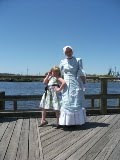
Best Story Teller in Town! 5 Star Reviews!

History Walking Tours of Old Wilmington

in Wilmington nc
Our leisurely tour takes us back in time as we talk about:

Three of the most historic homes in Wilmington. History of Wilmington's down town and how it developed. Cape Fear River and it's importance to the area. Wilmington during the Civil War, what life was like. Victorian customs, Folklore and Much More...

tours in wilmington, ghost walk of old wilmington tours in wilmington nc
History Walking Tour by Tour Old Wilmington​ NC
Tours Daily, Call for tour times!
910 409 4300

Adults, (13 & up) $12
Kids 12 and under, FREE with Two Paying Adults.
Single Adult Tours, $25

Locally Owned and Operated since 2009

e mail us @ lori.touroldwilmington@gmail.com


History Walking Tours

History Walking Tours
Open Year Round

3rd Graders on Tour!

3rd Graders on Tour!
History Walking Tour for all ages!

Write a Review for Tour Old Wilmington!

TripAdvisor
Review Tour Old Wilmington
Showing posts with label slave history. Show all posts
History Walking Tours by Tour Old Wilmington 
Call for tour times:
910-409-4300
12 and under FREE
(with family)

All others $12 per person
Locally Owned and Operated since 2009
Step On Guide, Private Group Tours, Field Trips
e mail us @ info.touroldwilmington@gmail.com

Railroad History


Owned primarily by the state of North Carolina, the North Carolina Railroad stretched 223 miles, beginning in Goldsboro, leading to Salisbury, and then turning south and ending in Charlotte.  The railroad was the largest internal improvement effort in North Carolina during the antebellum era.  It was chartered in 1849 and leased to the Richmond and Danville Railroad in 1871.

Antebellum North Carolina (1820-1850) acquired a reputation of backwardness and closed-mindedness.  For this reason, the state was nicknamed the “Rip Van Winkle State”--meaning it had been asleep and needed to awake and take advantage of economic opportunities.  Promoters of the North Carolina Railroad considered it a duty to do so, and to remain in Rip-Van-Winkle condition was considered “evil.”  Compared to Virginia and South Carolina, North Carolina played, at best, a minor role in regional trade.  Many Tar Heels, as a result, emigrated to enjoy a higher standard of living.  Some railroad boosters considered abandonment of their native place as an “evil,” too.

Advocates of internal improvements believed the North Carolina Railroad was the first step in rescuing their home state from its slothful, economic condition and dependence.  They also predicted increased urbanization and industrial growth.

As with most internal improvement legislation, the North Carolina Railroad charter bill of January 1849 inspired intense and prolonged debate.  One reason is that boosters asked for a sizable amount of money: a $3 million charter, of which the state paid $2 million after $1 million had been raised privately.  Many legislators were aghast.  Promoters therefore had to convince legislators that this alternative was preferable to allowing other railroad connections to build in North Carolina, with no cost to the taxpayer.  In the end, legislators deemed the construction of the North Carolina Railroad, although costly, most beneficial to the overall economic health of the state.  They hoped that, after the construction of the railroad, Tar Heels could produce their own products and crops and ship them to fellow North Carolinians; an intrastate economy, it was hoped, would wean the state from economically dependence.

The North Carolina Railroad charter bill created what contemporaries called a “log-rolling session.”  Most Whigs supported the charter bill, but many Democrats supported it, too.  Democrats were mostly divided by region (forty-percent of eastern Democrats supported the bill and only two legislators from the Piedmont backed it).  The bill narrowly passed the House and then passed the state Senate by only one vote.  The bill was passed because many political deals were made.  Despite allegations of graft and pork-barrel legislation, the North Carolina Railroad eventually served as a symbol of sectional compromise.

The North Carolina Railroad was chartered in 1849, and stockholders formed the company on July 11, 1850.

Boosters were surprised by the extra cost and effort needed to construct the railroad.  For construction to continue in a timely manner, the state granted the North Carolina Railroad Company an additional $1 million and exempted $350,000 of company bonds from taxation.  The railroad was completed after five years.  In 1856 Tar Heels celebrated the opening of the railroad, for it was a human accomplishment previously deemed impossible and fostered hope in a growing economy.  Some Tar Heels even thought that, by fostering economic growth, the railroad would close the financial gap between the rich and the poor.

The North Carolina Railroad was indeed a financial success.  Each year, revenue increased; consequently, state revenue grew, for the Old North State was the largest company stockholder.  Although it had a vested interest in the success of the rail, historians contend that the state government played a passive role in the rail company’s dealings.

The company’s financial success made some wonder whether politicians and their friends unduly benefited from the railroad’s construction.  For instance, the North Carolina Railroad passed through Hillsborough, Salisbury, and Concord--all three, hometowns of politicians, who strongly supported the construction of the railroad.

Many public benefits resulted from the North Carolina Railroad, however.  The foremost benefit was expanded trade.  Consumers had more choices and raised their standard of living.  Also, farmers imported new fertilizers to increase crop yields.  In particular, wheat, cotton, and tobacco production soared, but this crop growth resulted not from the increased purchase of slaves; the percentage of slave population growth (9%) was less than in the 1840s (15%).  In addition, the state experienced rapid urbanization.  New towns, such as High Point and Durham, were created along the rail line, and consequently, such towns operated as hubs of the growing textile and tobacco industries.  An interesting crop expansion was dried fruits.  Farmers barely produced $1,000 worth of fruit in 1850, but by 1880, dried-fruit farmers rivaled wheat farmers in production (almost $233,000).  Unsurprisingly the value of land near the railroad increased, too.  And another benefit of the railroad was less cultural isolation and more travel opportunities for work and leisure.

Those in the mountains and the coast realized the benefits of the North Carolina Railroad.  After its construction, they lobbied for connectors to be built in their regions, for they wanted expanded trade, urbanization, and economic growth.  Future generations credited the railroad for rescuing the state from cultural isolation and economic depression.

But the railroad brought unexpected outcomes.  Although consumer choices increased, it ensured that North Carolina remained mainly a supplier of staple crops in a larger system of free trade.  New Englanders, some scholars assert, benefited more from the North Carolina Railroad than did Tar Heels, who chose to import goods instead of diversifying their agricultural economy.  Instead of keeping Tar Heels at home, the railroad inspired many to leave the state: possibilities in the West and in Northern cities were calling them.

By the late 1860s, questions about the state-owned railroad ultimately led to its being leased and sold to private corporations.


 Sources:
Allen Trelease, The North Carolina Railroad, 1849-1871, and the Modernization of North Carolina  (Chapel Hill, 1991) and Alan D. Watson, Internal Improvements in Antebellum North Carolina (Raleigh, 2002).
By Troy L. Kickler, North Carolina History Project

Getting away with murder during the Civil War Part Three


 Getting away with murder! Part Three
The battlefield claimed many a brave officer, but there were a few others who met not-quite-so-honorable ends.

The Civil War was fought in an age when flair counted for nearly as much in society as character—and a number of generals outdid themselves. The North had Custer. With his starred sailor's blouse, silk cravat and broad-brimmed hat, the "boy general" cut an unmistakable figure. But for sheer flamboyance, no one outdid the soldiers of the romantic South. Many, including J.E.B. Stuart, John Hunt Morgan and the diminutive "Gray Ghost" John Singleton Mosby, affected the appearance of the beau sabreur. George Pickett's curly locks were so heavily perfumed that the scent was said to precede him into a room. But the pantheon of cavalier dandies would not be complete without General Earl Van Dorn. What he lacked in height—he stood only 5 feet 5 inches tall—he more than compensated for in overweening self-satisfaction. A fine horseman and self-styled poet and painter, Van Dorn cultivated his appearance to reflect his talents. A photograph of Van Dorn shows a reasonably handsome man with styled pomaded hair, a flowing mustache and collar, and velvet cape and waistcoat. The portrait suggests Lord Byron rather than a professional soldier—an image cultivated to further his other main interest: Married though he was, Van Dorn loved the ladies, and apparently it didn't matter whether they were already spoken for. One Vicksburg reporter branded him "the terror of ugly husbands and serious papas." Ultimately, the womanizing proved the general's undoing.

As a soldier, Van Dorn proved something of a disappointment. His military career had started brightly enough. He fought in Mexico, where he was twice wounded and his gallantry in battle earned him two promotions. After the Mexican War, Van Dorn fought the Seminoles in Florida, and the Comanches in Texas and the Indian Territory. He was wounded four more times—twice seriously—by Comanche arrows.

Van Dorn resigned from the U.S. Army when his native Mississippi left the Union. In April 1861, as commander of the Confederate forces in Texas, he so impressed the South's War Department that they brought him back to Richmond and gave him command of Virginia's cavalry—the pride of the Confederacy. By the turn of the year, he was a major general in charge of the new Trans-Mississippi District. Earl Van Dorn's star was clearly on the rise.
Soon, however, cracks began to appear in the plaster. Van Dorn played a significant part in the Southern defeat at Pea Ridge in early 1862. It was one of the rare instances in which Rebel forces outnumbered Yankee troops and lost. While Van Dorn was a fine cavalry officer, strategy was not his forte, and he was proving incapable of handling high command. Nor could he accept responsibility for his failures. In his official report, Van Dorn excused his role in the defeat by claiming "a series of accidents entirely unforeseen and not under my control and a badly-disciplined army defeated my intentions." Writing to Secretary of War Judah P. Benjamin, Van Dorn indulged in semantics: "I was not defeated, but only foiled in my intentions." So poorly did he perform at the Second Battle of Corinth that he was accused of drunkenness, negligence, disregard for his men's welfare and failure to adequately plan his charges. After his costly defeats at Pea Ridge and Corinth, Van Dorn's embittered troops gave him a nickname: "Damn Born." He was brought before a court of inquiry and, although acquitted, Van Dorn had commanded his last army. From then on, he was restricted to smaller commands, where his talents were better used.
Meanwhile, Van Dorn's extracurricular activities did not go unattended. Assigned to command a cavalry division in the Army of Tennessee in early 1863, he made his headquarters in Spring Hill, Tenn., at the mansion of a local resident. In the vicinity lived a prominent middle-aged physician, land speculator and slave trader named George B. Peters, whose young wife, Jessie, had caught the general's roving eye. They reportedly carried on a torrid affair, until one day in early May, when the outraged doctor walked up behind Van Dorn as he sat writing at his desk and shot him in the back of the head.
The details of the killing are shrouded in mystery. Some versions have Van Dorn writing a pass for Dr. Peters when he was shot. Other versions suggest there had been no illicit affair, and Peters was simply a Federal sympathizer acting for political reasons or profit. In any case, the shot was instantly fatal, depriving the Confederacy of a decent cavalry officer, Mrs. Van Dorn of her husband, Jessie Peters of a lover and the general himself of the opportunity to redeem his reputation in the field.
Peters was arrested but escaped prosecution, claiming Van Dorn had "violated the sanctity of his home." This was an offense the South could not forgive, and the Southern press was brutal in its condemnation. "It is a happy riddance," the Atlanta Confederacy trumpeted. "He was unfit to live." And according to the Montgomery Weekly Advertiser, "The impression around Spring Hill is that Van Dorn was rightly killed." The Advertiser goes on to say that Mrs. Peters—on hearing of Van Dorn's death—exclaimed that "she was a widow indeed, as her husband had fled, and her sweetheart was dead." The couple did, in fact, divorce, but later reconciled.
Throughout the war, there was no lack of enmity between generals—especially among the Confederates. Thin skins, the constant stress of war and the cultural expectation of manly conduct ensured that honor was easily offended.
Conflicts generally stopped short of bloodshed, but the possibility of mortal confrontation was never far removed. In a time when the horror of war was everywhere, and when violent death was an accepted part of daily life, it was inevitable that the fine line between defensible conduct and homicide would be crossed. Given the circumstances, it is not remarkable that three generals were murdered; it is, however, more than curious that none of the murderers—for murderers they clearly were—was ever punished.

·      Read more inAmerica's Civil War magazine
      Subscribe online and save nearly 40%!!!

Rose O'Neal Greenhow


Rose O'Neal Greenhow
Original name: 
Maria Rosetta O’Neale

Birth


1814
Montgomery County
Maryland, USA
Death: 
Sep. 30, 1864
North Carolina, USA
<!--[if !vml]--><!--[endif]-->
The "Rebel Rose" of the Civil War. "I employed every capacity with which God has endowed me, and the result was far more successful than my hopes could have flattered me to expect." Rose O'Neal Greenhow. She was born Maria Rosetta O’Neale in Montgomery County, Maryland to John O'Neale and Eliza Henrietta Hamilton and was orphaned as a child. When she was a teenager, she was invited to live with her aunt who ran the exclusive Congressional Boarding House in Washington, D.C. and was introduced to important figures in the Washington area. O’Neale was considered beautiful, educated, loyal, compassionate, and refined. Many were surprised when she accepted the marriage proposal of Dr. Robert Greenhow, a quiet physician and historian, who worked in the U.S. State Department and married him on Tuesday, May 27, 1835. Their marriage record lists her as Miss Rose Mariea O’Neale. Through her husband, she came to meet the leading southern politicians of the day, including Jefferson Davis, who was to become the first and only president of the Confederate States of America.

The Greenhows had four daughters: Florence, Gertrude, Leila, and little Rose. Dr. Greenhow died in 1854, soon after little Rose's birth. As the country moved toward war, Greenhow continued to host parties for both southern and northern politicians, but she made her views clear, that she was a southerner first, last, and always. A young lieutenant from Virginia named Thomas Jordan knew that Greenhow was probably the best-placed southerner in Washington and, after meeting with her, he proposed that she spy for the Confederacy, acting on behalf of Gen. Beauregard and she accepted. On July 9 and 16, 1861, Greenhow passed on secret messages to Confederate General Pierre G. T. Beauregard containing critical information regarding the 1st Bull Run (known in the South as the Battle of Manassas) campaign of Union General Irvin McDowel.

Confederate President Jefferson Davis credited Greenhow's information with securing victory at Manassas for the South. On August 11, 1861, she was able to send a report several pages long, detailing the complete Washington defense system. Every fort in the Washington area was described in detail, along with the number of guns, their caliber and range; weak spots in the earthworks; regiments identified by state origin and their strengths; the level of troop morale; number of officers and their experience; the political beliefs of the officers; the number of muskets issued to each regiment and the number of shots and grape issued for each weapon; the number of mules for freight-hauling available and the condition of the animals; itemized lists of wagons, ambulances and stores for each fort. 

This was the kind of information she delivered. She was arrested as a spy by Allan Pinkerton on August 23, 1861. Mrs. Greenhow was kept a prisoner in her home, which had been labeled "a clearing house for spies." Her home was officially made her prison by government decree on August 30, 1861. When guards discovered a Confederate plot to free Greenhow, the government acted, ordering her and her daughter, "Little Rose" transferred to the Old Capitol Prison on January 18, 1862. For five months, she and her daughter remained at the Old Capitol Prison, however, even her imprisonment did not deter her from continuing to provide information to Southern loyalists. This prompted Federal authorities to banish her south.

On June 2, the New York Times recorded her release and removal under close custody. On June 6, 1862, she and her daughter arrived in Richmond to wildly cheering crowds. Asked by the government to act as a courier to Confederate diplomats, she assumed the role of blockade runner and traveled to England and France. In September 1864, she boarded a blockade-runner, the Condor, bound for North Carolina. Spied by a Union gunboat in the waters just off the coast near Wilmington, North Carolina, the Condor raced ahead up the Cape Fear River hoping to avoid confrontation. Instead, the Condor ran aground on a sandbar. Desperate to escape, Greenhow boarded a lifeboat that capsized in the rough water and drowned.

In the afternoon of Saturday, October 1, 1864, her body was carried in a long funeral procession through the streets of Wilmington, a guard of honor accompanying her horse-drawn casket which was draped with a huge Confederate flag. Thousands of soldiers marched behind it, led by Admiral Hampden and many other Confederate officers, to Oakdale Cemetery. A squad of Confederate soldiers fired their muskets over her grave as the guns of Fort Fisher boomed in her honor. 

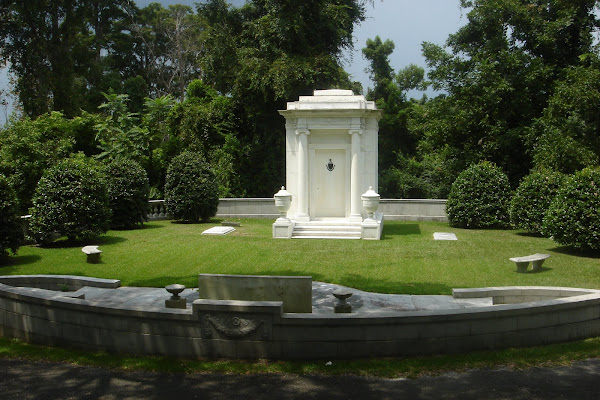
Note: A great white stone was later placed above her grave, purchased by the Ladies Memorial Association of Wilmington. On it bears the legend: "This monument commemorates the deeds of Mrs. Rose Greenhow, a bearer of dispatches to the Confederate government. She was drowned off Fort Fisher from the blockade runner ‘Condor' while attempting to run the blockade on September 30, 1864. Her body was washed ashore at Fort Fisher Beach and brought to Wilmington."
 (bio by: Debbie)

Family links:
 Parents:
  John O'Neal (1770 - 1817)
  Eliza Henrietta Hamilton O'Neal

 Spouse:
  Robert Greenhow (1800 - 1854)*

 Children:
  Rose Greenhow Duvall (1853 - ____)*

*Calculated relationship


Search Amazon for Rose Greenhow

Omar Ibn Said (1770-1864)


Also known as “Uncle Moro” or “Moreau,” Omar Ibn Said was born in Northwest Africa to a wealthy, and possibly royal, family.  In 1807, a year before the Constitution made the international slave trade illegal, he was captured as a result of African warfare, sold to slave traders, and shipped to Charleston, South Carolina.  Fleeing his abusive South Carolina master, he fled north and eventually arrived in Fayetteville, where he was captured while praying in a church.  Later purchased by James Owen, the future president of the Wilmington and Raleigh Railroad and major-general of the militia, Said, a house slave, openly condemned the “wicked” slave trade and the actions of “depraved” masters. According to contemporary magazines, however, he lauded Owen for his benevolent paternalism and Christian charity.  Said lived out the rest of his life in Bladen County and died in 1864.

Since 1995 when his autobiography, the only American slave narrative known to exist in Arabic, was found, Said has gained national attention.  Many scholars contend Said was a devout Muslim until his death.  Said, however, made a Christian profession of faith and joined the Presbyterian Church.  Said could have written approximately fourteen Arabic manuscripts.

Sources:
By Troy L. Kickler, North Carolina History Project