e mail us @ lori.touroldwilmington@gmail.com
History Walking Tours
Open Year Round
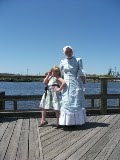
3rd Graders on Tour!
History Walking Tour for all ages!
Showing posts with label Bellamy Mansionhaunted cotton exchange. Show all posts
Review for Tour Old Wilmington
Lori is an outstanding guide! Today she took Laura Heidel 's group on a tour of Old Wilmington. Her exceptional knowledge and enthusiasm were incredible. It was such a pleasure to be able to hear every word she said.
Lyle Sullivan
See Tour Old Wilmington Facebook!
Lyle Sullivan
See Tour Old Wilmington Facebook!
The Kenan Fountain
![]() |
The Kenan Fountain
Market Street & Fifth Avenue
An architectural gem, the Kenan Memorial Fountain was erected in 1921 in the middle of the large intersection of Fifth Avenue and Market Street. Wilmington native, William Rand Kenan, Jr., gave the fountain to the city to memorialize his parents, William Rand and Mary Hargrave Kenan. Carrere and Hastings of New York, a respected architectural firm that designed the New York Public Library, drew the plans for the fountain. It was made out of Indiana limestone and cost $43,000. The fountain was sculpted in New York, then dismantled and shipped to Wilmington where it was rebuilt.
When Mr. Kenan gave the fountain to the city most residents still walked or took a streetcar. However, some pessimistic citizens predicted that it would become a traffic hazard. Their forecast came true as the city grew and automobiles became a preferred mode of transportation.
Source: A Pictorial History of Wilmington by Anne Russell
To purchase the book please visit the Two Sisters Bookery @ the Cotton Exchange in Wilmington NC
|
Getting away with murder during the Civil War Part Three
Getting away with murder! Part Three
The battlefield claimed many a brave officer, but there were a few others who met not-quite-so-honorable ends.
The Civil War was fought in an age when flair counted for nearly as much in society as character—and a number of generals outdid themselves. The North had Custer. With his starred sailor's blouse, silk cravat and broad-brimmed hat, the "boy general" cut an unmistakable figure. But for sheer flamboyance, no one outdid the soldiers of the romantic South. Many, including J.E.B. Stuart, John Hunt Morgan and the diminutive "Gray Ghost" John Singleton Mosby, affected the appearance of the beau sabreur. George Pickett's curly locks were so heavily perfumed that the scent was said to precede him into a room. But the pantheon of cavalier dandies would not be complete without General Earl Van Dorn. What he lacked in height—he stood only 5 feet 5 inches tall—he more than compensated for in overweening self-satisfaction. A fine horseman and self-styled poet and painter, Van Dorn cultivated his appearance to reflect his talents. A photograph of Van Dorn shows a reasonably handsome man with styled pomaded hair, a flowing mustache and collar, and velvet cape and waistcoat. The portrait suggests Lord Byron rather than a professional soldier—an image cultivated to further his other main interest: Married though he was, Van Dorn loved the ladies, and apparently it didn't matter whether they were already spoken for. One Vicksburg reporter branded him "the terror of ugly husbands and serious papas." Ultimately, the womanizing proved the general's undoing.
As a soldier, Van Dorn proved something of a disappointment. His military career had started brightly enough. He fought in Mexico , where he was twice wounded and his gallantry in battle earned him two promotions. After the Mexican War, Van Dorn fought the Seminoles in Florida , and the Comanches in Texas and the Indian Territory . He was wounded four more times—twice seriously—by Comanche arrows.
Van Dorn resigned from the U.S. Army when his native Mississippi left the Union . In April 1861, as commander of the Confederate forces in Texas, he so impressed the South's War Department that they brought him back to Richmond and gave him command of Virginia's cavalry—the pride of the Confederacy. By the turn of the year, he was a major general in charge of the new Trans-Mississippi District. Earl Van Dorn's star was clearly on the rise.
Soon, however, cracks began to appear in the plaster. Van Dorn played a significant part in the Southern defeat at Pea Ridge in early 1862. It was one of the rare instances in which Rebel forces outnumbered Yankee troops and lost. While Van Dorn was a fine cavalry officer, strategy was not his forte, and he was proving incapable of handling high command. Nor could he accept responsibility for his failures. In his official report, Van Dorn excused his role in the defeat by claiming "a series of accidents entirely unforeseen and not under my control and a badly-disciplined army defeated my intentions." Writing to Secretary of War Judah P. Benjamin, Van Dorn indulged in semantics: "I was not defeated, but only foiled in my intentions." So poorly did he perform at the Second Battle of Corinth that he was accused of drunkenness, negligence, disregard for his men's welfare and failure to adequately plan his charges. After his costly defeats at Pea Ridge and Corinth , Van Dorn's embittered troops gave him a nickname: "Damn Born." He was brought before a court of inquiry and, although acquitted, Van Dorn had commanded his last army. From then on, he was restricted to smaller commands, where his talents were better used.
Meanwhile, Van Dorn's extracurricular activities did not go unattended. Assigned to command a cavalry division in the Army of Tennessee in early 1863, he made his headquarters in Spring Hill , Tenn. , at the mansion of a local resident. In the vicinity lived a prominent middle-aged physician, land speculator and slave trader named George B. Peters, whose young wife, Jessie, had caught the general's roving eye. They reportedly carried on a torrid affair, until one day in early May, when the outraged doctor walked up behind Van Dorn as he sat writing at his desk and shot him in the back of the head.
The details of the killing are shrouded in mystery. Some versions have Van Dorn writing a pass for Dr. Peters when he was shot. Other versions suggest there had been no illicit affair, and Peters was simply a Federal sympathizer acting for political reasons or profit. In any case, the shot was instantly fatal, depriving the Confederacy of a decent cavalry officer, Mrs. Van Dorn of her husband, Jessie Peters of a lover and the general himself of the opportunity to redeem his reputation in the field.
Peters was arrested but escaped prosecution, claiming Van Dorn had "violated the sanctity of his home." This was an offense the South could not forgive, and the Southern press was brutal in its condemnation. "It is a happy riddance," the Atlanta Confederacy trumpeted. "He was unfit to live." And according to the Montgomery Weekly Advertiser, "The impression around Spring Hill is that Van Dorn was rightly killed." The Advertiser goes on to say that Mrs. Peters—on hearing of Van Dorn's death—exclaimed that "she was a widow indeed, as her husband had fled, and her sweetheart was dead." The couple did, in fact, divorce, but later reconciled.
Throughout the war, there was no lack of enmity between generals—especially among the Confederates. Thin skins, the constant stress of war and the cultural expectation of manly conduct ensured that honor was easily offended.
Conflicts generally stopped short of bloodshed, but the possibility of mortal confrontation was never far removed. In a time when the horror of war was everywhere, and when violent death was an accepted part of daily life, it was inevitable that the fine line between defensible conduct and homicide would be crossed. Given the circumstances, it is not remarkable that three generals were murdered; it is, however, more than curious that none of the murderers—for murderers they clearly were—was ever punished.
· Read more inAmerica's Civil War magazine
Subscribe online and save nearly 40%!!!
Rose O'Neal Greenhow
Rose O'Neal
Greenhow
Original name:
Maria
Rosetta O’Neale
Birth:
|
1814
|
Death:
|
Sep. 30, 1864
|
|
The "Rebel Rose" of the Civil War. "I employed every capacity with which God has endowed me, and the result was far more successful than my hopes could have flattered me to expect." Rose O'Neal Greenhow. She was born Maria Rosetta O’Neale in
The
Greenhows had four daughters:
Confederate
President Jefferson Davis credited Greenhow's information with securing
victory at
This was the kind of information
she delivered. She was arrested as a spy by Allan Pinkerton on August 23,
1861. Mrs. Greenhow was kept a prisoner in her home, which had been labeled
"a clearing house for spies." Her home was officially made her
prison by government decree on August 30, 1861. When guards discovered a Confederate
plot to free Greenhow, the government acted, ordering her and her daughter,
"Little Rose" transferred to the Old Capitol Prison on January 18,
1862. For five months, she and her daughter remained at the Old Capitol
Prison, however, even her imprisonment did not deter her from continuing to
provide information to Southern loyalists. This prompted Federal authorities
to banish her south.
On
June 2, the New York Times recorded her release and removal under close
custody. On June 6, 1862, she and her daughter arrived in
In
the afternoon of Saturday, October 1, 1864, her body was carried in a long
funeral procession through the streets of
Note: A great white stone was later placed above her
grave, purchased by the Ladies Memorial Association of
(bio by: Debbie)
Family links: Parents: John O'Neal (1770 - 1817) Eliza Henrietta Hamilton O'Neal Spouse: Robert Greenhow (1800 - 1854)* Children: Rose Greenhow Duvall (1853 - ____)* *Calculated relationship Search Amazon for Rose Greenhow |
|
William Hooper 1742-1790
A representative of North Carolina at the signing of the Declaration of Independence, William Hooper was born on June 28, 1742, in Boston, Massachusetts. His Scotch immigrant father, also named William Hooper, was initially a Congregationalist minister but converted to the Anglican faith five years after his arrival in the colonies. Reared in an Anglican household, the young Hooper’s parents wanted him to enter the clergy. Refusing to do so, young William matriculated at the Boston Latin school for seven years and earned an M.A in theology from Harvard University.
He then moved to Wilmington, North Carolina and eventually supported American independence. His Loyalist father was displeased and disowned his patriotic son. Hooper went on to study law under James Otis, a published political radical. Hooper eventually married Anne Clarke, the daughter of an early settler to the area. They had three children: a daughter and two sons. The family remained in the Wilmington area, because Hooper had established a professional network, developed a wealthy clientele, and served as a circuit judge. The increasingly popular Hooper was appointed Deputy Attorney for the Salisbury district in 1769 and later Deputy Attorney General for North Carolina in 1770.
Hooper supported Governor Tryon when the Crown put down the Regulators, commonly referred to as backwoodsmen. These Piedmont farmers opposed excessive colonial government taxation, excessive legal fees, and corruption—a charge levied against Edmund Fanning, clerk of court for the Salisbury district. Taxes for the construction of the Tryon Palace in New Bern especially enraged the Regulators, who deemed an ostentatious palace as unnecessary and a symbol that the colonial administration cared more for pomp and circumstance than about the backcountry’s economic needs. After years of legal and extralegal protests and demands for regulation, the Piedmont farmers engaged Tryon’s troops on a field near Alamance in 1771.
In the 1770s, Hooper’s political influence increased even more. In 1773 he was elected representative for the Scots settlement of Campbellton (later called Fayetteville). He then went to the Colonial Assembly serving New Hanover County and was soon appointed to the Committee of Correspondence and Inquiry. He was unanimously elected recorder of the Cape Fear region in June 1776, and one year later became the Deputy Attorney General of the Salisbury District. No doubt his political success encouraged the political success of his son, also named William, who represented Wilmington in the North Carolina Colonial Assembly from 1773-1775, a time when the Assembly attempted to increase the powers of the courts. The Act included a provision authorizing the Assembly to confiscate colonial property owned by foreign debtors, including that of the British. When the Colonial Governor vetoed the Bill, William Hooper supported Tryon and the Crown against the Colonial Assembly.
However, as a result of his support for the Crown at Alamance, his success was short lived. He was dragged through the streets of Hillsborough and his home destroyed. (Whether these experiences started his evolution from a Loyalist to revolutionary is not clear.) Even so, he helped organize a conference in Wilmington after the Royal Governor dissolved the Colonial Assembly and assisted in establishing a new Colonial Assembly more favorable to the Crown. By 1774 he had established his bona fides (information that establishes one’s credit or honor) and was appointed one of North Carolina’s three delegates to the first Continental Congress. With Thomas Jefferson, Hooper then served on a committee to draft the Declaration of Independence, but private affairs prevented his attendance when the document was approved; he later signed it on August 2, 1776.
In support of American independence, he donated his fortune and future professional income as a lawyer. When he entered the Second Continental Congress, he opposed British rule. While members of his family remained Loyalists he was appointed in 1776 to a committee with Benjamin Franklin and Phillip Livingstone, a signer of the Declaration of Independence, to honor General Richard Montgomery, who had recently fallen at Quebec. Hooper left Congress, however, when he contracted yellow fever in 1777.
His participation in the struggle for independence included his service with the General Assembly until 1783; he was still a member of the Continental Congress and used his legal expertise in helping establish a state government. As a result of his changing loyalties, the Crown decided to "educate" Hooper so that all rebels would understand the consequences of their actions. His plantation, Finian, on the Masonboro Sound was destroyed. Suffering from malaria and a badly injured arm, and fleeing from home to home, Hooper soon found refuge in Hillsborough, where he was able to serve as a state legislator.
After independence, Hooper pursued a conservative, or federalist, political ideology, which many disagreed with. As per the treaty ending the war, he forgave loyalists and protected their rights even when a majority in his jurisdiction wanted revenge; the fact that the British reneged on their obligations only made matters worse. Plus, his aristocratic status and fear of mob rule fostered distrust among average Americans. His adherence to the letter of the law also angered many. As a result, the average American Democratic-Republican mistrusted him in 1787, when he promoted state ratification of the federal constitution.
He was appointed a federal judge in 1789 and served for one year, before his bad health forced him to retire. He died shortly thereafter on October 14, 1790 at the age of forty-eight. His wife died in August 1795. They were initially interned in Orange County, North Carolina.
Sources:
Edward J. Cashin, William Bartram And The American Revolution In The South (Columbia, 2000); John, Frehling, A Leap In The Dark: The Struggle To Create The American Republic (New York, 2003); Robert Charles Knief, “ William Hooper, 1742-1790, Misunderstood Patriot” (Ph.D. diss., Tulane University, 1980); William Powell, North Carolina: A History (Chapel Hill, 1988); Edward C. Quinn, Signer Of The Constitution Of The United States (New York, 1988); Phillip Roth, Masonry In The Formation Of Our Government, 1761-1799 (New York, December, 2005); “William Hooper, Signer Of The Declaration of Independence," http://www.virtualology.com/williamhooper.net (accessed 12 June 2006).
By Arthur Steinberg, Catawba College
Famous People Buried at Oakdale Cemetery
John Dillard Bellamy
Birth: Mar. 24, 1854
Wilmington
NewHanover County
North Carolina , USADeath: Sep. 25, 1942
Wilmington
NewHanover County
North Carolina , USA 
US Congressman. Bellamy was a member of the North Carolina State senate from 1900 to 1902. He served as a U.S. Representative from North Carolina from 1899 to 1903. (bio by: Evening Blues)
Family links:
Spouse:
Emma May Hargrove Bellamy (1857 - 1944)*
Children:
Eliza M Bellamy Williamson (1877 - 1969)*
*Calculated relationship
Search Amazon for John Bellamy Burial:
Oakdale Cemetery
Wilmington
New Hanover County
North Carolina, USA
Maintained by: Find A Grave
Originally Created by: Evening Blues
Record added: Nov 07, 2003
Find A Grave Memorial# 8067171
New
New
Family links:
Spouse:
Emma May Hargrove Bellamy (1857 - 1944)*
Children:
Eliza M Bellamy Williamson (1877 - 1969)*
*Calculated relationship
Search Amazon for John Bellamy Burial:
Oakdale Cemetery
Wilmington
New Hanover County
North Carolina, USA
Maintained by: Find A Grave
Originally Created by: Evening Blues
Record added: Nov 07, 2003
Find A Grave Memorial# 8067171
David Brinkley

Birth: Jul. 10, 1920
Wilmington
NewHanover County
North Carolina , USADeath: Jun. 12, 2003
Houston
Harris County
Texas , USA 
Television Personality/Newscaster. Brinkley was born on July 18, 1920, inWilmington , North Carolina . He was a main fixture on television for over 50 years including on NBC and ABC, beginning his career as a broadcaster in the 1940s. Appearing as a co-anchor with Chet Huntley on the news program, "The Huntley-Brinkley Report" from 1956 to 1970, and "This Week With David Brinkley" from 1982 until he retired in 1997. In 1992 he won the George Foster Peabody Award for his report on the 50th anniversary of the Japanese attack on Pearl Harbor on December 7, 1941, during World War II. He also appeared as a narrator on the 1961 film, "The Challenge of Ideas" and as himself in an episode of, "The Jack Benny Program" on September 25, 1964. He was well-known to television audiences as a news analyst for his terse, biting comments and dry wit. He was also the recipient of two more George Foster Peabody Awards, 10 Emmy Awards, and the Presidential Medal of Freedom, the highest civilian honor. In 1995 he wrote his memoirs, "11 Presidents, 4 Wars, 22 Political Conventions, 1 Moon Landing, 3 Assassinations, 2,000 Weeks Of News, and Other Stuff On Television." He retired from broadcasting in 1997. He died June 11, 2003, at the age of 82, after a fall at his home in Houston , Texas . (bio by: K)
Family links:
Parents:
William Graham Brinkley (1875 - 1928)
Mary West Brinkley (1879 - 1966)
Search Amazon for David Brinkley Burial:
Oakdale Cemetery
Wilmington
New Hanover County
North Carolina, USA
Maintained by: Find A Grave
Record added: Jun 12, 2003
Find A Grave Memorial# 7567008
New
Television Personality/Newscaster. Brinkley was born on July 18, 1920, in
Family links:
Parents:
William Graham Brinkley (1875 - 1928)
Mary West Brinkley (1879 - 1966)
Search Amazon for David Brinkley Burial:
Oakdale Cemetery
Wilmington
New Hanover County
North Carolina, USA
Maintained by: Find A Grave
Record added: Jun 12, 2003
Find A Grave Memorial# 7567008
Subscribe to:
Posts (Atom)