Best Story Teller in Town! 5 Star Reviews!

History Walking Tours of Old Wilmington

in Wilmington nc
Our leisurely tour takes us back in time as we talk about:

Three of the most historic homes in Wilmington. History of Wilmington's down town and how it developed. Cape Fear River and it's importance to the area. Wilmington during the Civil War, what life was like. Victorian customs, Folklore and Much More...

tours in wilmington, ghost walk of old wilmington tours in wilmington nc
History Walking Tour by Tour Old Wilmington​ NC
Tours Daily, Call for tour times!
910 409 4300

Adults, (13 & up) $12
Kids 12 and under, FREE with Two Paying Adults.
Single Adult Tours, $25

Locally Owned and Operated since 2009

e mail us @ lori.touroldwilmington@gmail.com


History Walking Tours

History Walking Tours
Open Year Round

3rd Graders on Tour!

3rd Graders on Tour!
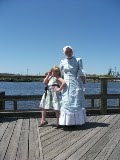
History Walking Tour for all ages!

Write a Review for Tour Old Wilmington!

TripAdvisor
Review Tour Old Wilmington
Showing posts with label ghost. Show all posts

Rose O'Neal Greenhow


Rose O'Neal Greenhow
Original name: 
Maria Rosetta O’Neale

Birth: 


1814
Montgomery County
Maryland, USA
Death: 
Sep. 30, 1864
North Carolina, USA
<!--[if !vml]--><!--[endif]-->
The "Rebel Rose" of the Civil War. "I employed every capacity with which God has endowed me, and the result was far more successful than my hopes could have flattered me to expect." Rose O'Neal Greenhow. She was born Maria Rosetta O’Neale in Montgomery County, Maryland to John O'Neale and Eliza Henrietta Hamilton and was orphaned as a child. When she was a teenager, she was invited to live with her aunt who ran the exclusive Congressional Boarding House in Washington, D.C. and was introduced to important figures in the Washington area. O’Neale was considered beautiful, educated, loyal, compassionate, and refined. Many were surprised when she accepted the marriage proposal of Dr. Robert Greenhow, a quiet physician and historian, who worked in the U.S. State Department and married him on Tuesday, May 27, 1835. Their marriage record lists her as Miss Rose Mariea O’Neale. Through her husband, she came to meet the leading southern politicians of the day, including Jefferson Davis, who was to become the first and only president of the Confederate States of America.

The Greenhows had four daughters: Florence, Gertrude, Leila, and little Rose. Dr. Greenhow died in 1854, soon after little Rose's birth. As the country moved toward war, Greenhow continued to host parties for both southern and northern politicians, but she made her views clear, that she was a southerner first, last, and always. A young lieutenant from Virginia named Thomas Jordan knew that Greenhow was probably the best-placed southerner in Washington and, after meeting with her, he proposed that she spy for the Confederacy, acting on behalf of Gen. Beauregard and she accepted. On July 9 and 16, 1861, Greenhow passed on secret messages to Confederate General Pierre G. T. Beauregard containing critical information regarding the 1st Bull Run (known in the South as the Battle of Manassas) campaign of Union General Irvin McDowel.

Confederate President Jefferson Davis credited Greenhow's information with securing victory at Manassas for the South. On August 11, 1861, she was able to send a report several pages long, detailing the complete Washington defense system. Every fort in the Washington area was described in detail, along with the number of guns, their caliber and range; weak spots in the earthworks; regiments identified by state origin and their strengths; the level of troop morale; number of officers and their experience; the political beliefs of the officers; the number of muskets issued to each regiment and the number of shots and grape issued for each weapon; the number of mules for freight-hauling available and the condition of the animals; itemized lists of wagons, ambulances and stores for each fort. 

This was the kind of information she delivered. She was arrested as a spy by Allan Pinkerton on August 23, 1861. Mrs. Greenhow was kept a prisoner in her home, which had been labeled "a clearing house for spies." Her home was officially made her prison by government decree on August 30, 1861. When guards discovered a Confederate plot to free Greenhow, the government acted, ordering her and her daughter, "Little Rose" transferred to the Old Capitol Prison on January 18, 1862. For five months, she and her daughter remained at the Old Capitol Prison, however, even her imprisonment did not deter her from continuing to provide information to Southern loyalists. This prompted Federal authorities to banish her south.

On June 2, the New York Times recorded her release and removal under close custody. On June 6, 1862, she and her daughter arrived in Richmond to wildly cheering crowds. Asked by the government to act as a courier to Confederate diplomats, she assumed the role of blockade runner and traveled to England and France. In September 1864, she boarded a blockade-runner, the Condor, bound for North Carolina. Spied by a Union gunboat in the waters just off the coast near Wilmington, North Carolina, the Condor raced ahead up the Cape Fear River hoping to avoid confrontation. Instead, the Condor ran aground on a sandbar. Desperate to escape, Greenhow boarded a lifeboat that capsized in the rough water and drowned.

In the afternoon of Saturday, October 1, 1864, her body was carried in a long funeral procession through the streets of Wilmington, a guard of honor accompanying her horse-drawn casket which was draped with a huge Confederate flag. Thousands of soldiers marched behind it, led by Admiral Hampden and many other Confederate officers, to Oakdale Cemetery. A squad of Confederate soldiers fired their muskets over her grave as the guns of Fort Fisher boomed in her honor. 

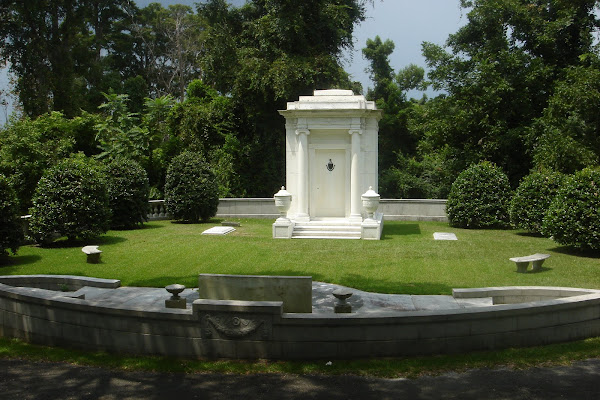
Note: A great white stone was later placed above her grave, purchased by the Ladies Memorial Association of Wilmington. On it bears the legend: "This monument commemorates the deeds of Mrs. Rose Greenhow, a bearer of dispatches to the Confederate government. She was drowned off Fort Fisher from the blockade runner ‘Condor' while attempting to run the blockade on September 30, 1864. Her body was washed ashore at Fort Fisher Beach and brought to Wilmington."
 (bio by: Debbie)

Family links:
 Parents:
  John O'Neal (1770 - 1817)
  Eliza Henrietta Hamilton O'Neal

 Spouse:
  Robert Greenhow (1800 - 1854)*

 Children:
  Rose Greenhow Duvall (1853 - ____)*

*Calculated relationship


Search Amazon for Rose Greenhow

William Hooper 1742-1790


A representative of North Carolina at the signing of the Declaration of Independence, William Hooper was born on June 28, 1742, in Boston, Massachusetts.  His Scotch immigrant father, also named William Hooper, was initially a Congregationalist minister but converted to the Anglican faith five years after his arrival in the colonies. Reared in an Anglican household, the young Hooper’s parents wanted him to enter the clergy. Refusing to do so, young William matriculated at the Boston Latin school for seven years and earned an M.A in theology from Harvard University.

He then moved to Wilmington, North Carolina and eventually supported American independence. His Loyalist father was displeased and disowned his patriotic son. Hooper went on to study law under James Otis, a published political radical. Hooper eventually married Anne Clarke, the daughter of an early settler to the area. They had three children: a daughter and two sons. The family remained in the Wilmington area, because Hooper had established a professional network, developed a wealthy clientele, and served as a circuit judge.  The increasingly popular Hooper was appointed Deputy Attorney for the Salisbury district in 1769 and later Deputy Attorney General for North Carolina in 1770.

Hooper supported Governor Tryon when the Crown put down the Regulators, commonly referred to as backwoodsmen. These Piedmont farmers opposed excessive colonial government taxation, excessive legal fees, and corruption—a charge levied against Edmund Fanning, clerk of court for the Salisbury district. Taxes for the construction of the Tryon Palace in New Bern especially enraged the Regulators, who deemed an ostentatious palace as unnecessary and a symbol that the colonial administration cared more for pomp and circumstance than about the backcountry’s economic needs. After years of legal and extralegal protests and demands for regulation, the Piedmont farmers engaged Tryon’s troops on a field near Alamance in 1771. 

In the 1770s, Hooper’s political influence increased even more.  In 1773 he was elected representative for the Scots settlement of Campbellton (later called Fayetteville).  He then went to the Colonial Assembly serving New Hanover County and was soon appointed to the Committee of Correspondence and Inquiry. He was unanimously elected recorder of the Cape Fear region in June 1776, and one year later became the Deputy Attorney General of the Salisbury District.  No doubt his political success encouraged the political success of his son, also named William, who represented Wilmington in the North Carolina Colonial Assembly from 1773-1775, a time when the Assembly attempted to increase the powers of the courts.  The Act included a provision authorizing the Assembly to confiscate colonial property owned by foreign debtors, including that of the British.  When the Colonial Governor vetoed the Bill, William Hooper supported Tryon and the Crown against the Colonial Assembly.

However, as a result of his support for the Crown at Alamance, his success was short lived. He was dragged through the streets of Hillsborough and his home destroyed.  (Whether these experiences started his evolution from a Loyalist to revolutionary is not clear.) Even so, he helped organize a conference in Wilmington after the Royal Governor dissolved the Colonial Assembly and assisted in establishing a new Colonial Assembly more favorable to the Crown. By 1774 he had established his bona fides  (information that establishes one’s credit or honor) and was appointed one of North Carolina’s three delegates to the first Continental Congress. With Thomas Jefferson, Hooper then served on a committee to draft the Declaration of Independence, but private affairs prevented his attendance when the document was approved;  he later signed it on August  2, 1776. 

In support of American independence, he donated his fortune and future professional income as a lawyer. When he entered the Second Continental Congress, he opposed British rule. While members of his family remained Loyalists he was appointed in 1776 to a committee with Benjamin Franklin and Phillip Livingstone, a signer of the Declaration of Independence, to honor General Richard Montgomery, who had recently fallen at Quebec.  Hooper left Congress, however, when he contracted yellow fever in 1777.


His participation in the struggle for independence included his service with the General Assembly until 1783; he was still a member of the Continental Congress and used his legal expertise in helping establish a state government. As a result of his changing loyalties, the Crown decided to "educate" Hooper so that all rebels would understand the consequences of their actions.  His plantation, Finian, on the Masonboro Sound was destroyed.  Suffering from malaria and a badly injured arm, and fleeing from home to home, Hooper soon found refuge in Hillsborough, where he was able to serve as a state legislator.

After independence, Hooper pursued a conservative, or federalist, political ideology, which many disagreed with. As per the treaty ending the war, he forgave loyalists and protected their rights even when a majority in his jurisdiction wanted revenge; the fact that the British reneged on their obligations only made matters worse. Plus, his aristocratic status and fear of mob rule fostered distrust among average Americans. His adherence to the letter of the law also angered many.  As a result, the average American Democratic-Republican mistrusted him in 1787, when he promoted state ratification of the federal constitution.    
He was appointed a federal judge in 1789 and served for one year, before his bad health forced him to retire.  He died shortly thereafter on October 14, 1790 at the age of forty-eight. His wife died in August 1795.  They were initially interned in Orange County, North Carolina.


Sources:
Edward J. Cashin, William Bartram And The American Revolution In The South (Columbia, 2000); John, Frehling, A Leap In The Dark: The Struggle To Create The American Republic (New York, 2003); Robert Charles Knief,  “ William Hooper, 1742-1790, Misunderstood Patriot” (Ph.D. diss., Tulane University, 1980); William Powell, North Carolina: A History (Chapel Hill, 1988); Edward C. Quinn, Signer Of The Constitution Of The United States (New York, 1988); Phillip Roth, Masonry In The Formation Of Our Government, 1761-1799 (New York, December, 2005); “William Hooper, Signer Of The Declaration of Independence," http://www.virtualology.com/williamhooper.net (accessed 12 June 2006).
By Arthur Steinberg, Catawba College

Captain William Ellerbrook and his faithful dog, Boss


One fateful night in 1880, Captain Ellerbrook answered a call to save the burning store. Running into the burning building, Ellerbrook was caught by failing timbers, hearing his owners screams for help, his dog, Boss dashed into the burning building, only to be found the next day beside Ellerbrook’s body with a piece of cloth torn from his master’s coast sill in his mouth.  The dog was buried in the casket with Captain Ellerbrook.  Much loved and respected, their funeral was attended by hundreds of Wilmington Citizens. 

Source: A Pictorial History of Wilmington by Anne Russell 
To purchase the book please visit the Two Sisters Bookery @ the Cotton Exchange in Wilmington NC


Fred the Ghost @ the Haunted Cotton Exchange Wilmington NC

Welcome to Tour Old Wilmington's new blog site!

Fred the Ghost, pictured below is a great example of local spooky lore.

I took this picture in Paddy Hollows located in The Cotton Exchange in beautiful downtown Wilmington NC. It was about 4:oo pm in the afternoon. I had just finished talking to the bartender about the possibility of ghost haunting the old place. Goofing around, I took several pictures. In this one you can see the face of Fred the Ghost.
He is said to haunt the bar and loves to pull practical jokes on the restaurant staff.