Best Story Teller in Town! 5 Star Reviews!

History Walking Tours of Old Wilmington

in Wilmington nc
Our leisurely tour takes us back in time as we talk about:

Three of the most historic homes in Wilmington. History of Wilmington's down town and how it developed. Cape Fear River and it's importance to the area. Wilmington during the Civil War, what life was like. Victorian customs, Folklore and Much More...

tours in wilmington, ghost walk of old wilmington tours in wilmington nc
History Walking Tour by Tour Old Wilmington​ NC
Tours Daily, Call for tour times!
910 409 4300

Adults, (13 & up) $12
Kids 12 and under, FREE with Two Paying Adults.
Single Adult Tours, $25

Locally Owned and Operated since 2009

e mail us @ lori.touroldwilmington@gmail.com


History Walking Tours

History Walking Tours
Open Year Round

3rd Graders on Tour!

3rd Graders on Tour!
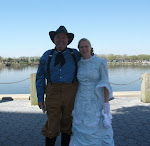
History Walking Tour for all ages!

Write a Review for Tour Old Wilmington!

TripAdvisor
Review Tour Old Wilmington
Showing posts with label civil war. Show all posts
History Walking Tours by Tour Old Wilmington 
Call for tour times:
910-409-4300
12 and under FREE
(with family)

All others $12 per person
Locally Owned and Operated since 2009
Step On Guide, Private Group Tours, Field Trips
e mail us @ info.touroldwilmington@gmail.com

The Wilmington Campaign

While most aspects of the American Civil War have been examined in minute detail by an infinite body of historians, journalists, novelists, and writers in general, it actually is possible for a probing historian to break new ground while examining an important campaign of that great American tragedy. Chris E. Fonvielle, Jr., has accomplished this with his handsome volume on the Wilmington Campaign. Fonvielle has not simply duplicated other recent studies that focused on the more celebrated battles of the campaign. He has methodically reported and analyzed the campaign in its entirety by providing a full portrait of the war on North Carolina's southeastern coast. His study includes an examination of the background and importance of Wilmington and the Cape Fear River to the Confederate war effort, the construction and strength of the formidable Cape Fear fortifications, the two attacks on Fort Fisher, and the subsequent march on Wilmington.

As the war progressed, the river port of Wilmington took on increasing strategic importance to the Confederacy. Located thirty miles up the Cape Fear River, it had the unique geographic advantage of occupying a river that was perfectly suited to blockade-running. Frying Pan Shoals separated the river's two inlets, and the Union blockading fleet found it virtually impossible to blanket the sixty miles of coast between the inlets and prevent the continuous ocean traffic that went in and out of the city. By 1864, Wilmington had constituted the only major Confederate port remaining open to the outside world, and its railroad facilities transported the arms and provisions necessary to maintain Robert E. Lee's army.

During the war, blockade-runners made more than 400 trips into Cape Fear, bringing in some $65 million in supplies. In addition to clothing and other civilian merchandise, vast quantities of arms, munitions, uniforms, and other military supplies destined for Lee's army made their way northward through the port of Wilmington. In an effort to protect Cape Fear, a series of massive earthen forts was designed to guard the inlets and the river approaches to Wilmington. Fort Fisher extended along the coast from New Inlet north for 1,300 yards before projecting west for 480 yards toward the Cape Fear River to form a giant "7." It was the region's most formidable installation and became generally known as the "Gibraltar of the South."

Confederate authorities deemed the massive earthen fort impregnable, and one Union general proclaimed it to be the strongest fort he ever encountered. In an effort to close this last gateway to the outside world, Federal authorities late in 1864 ordered the capture of Cape Fear. A Union assault on December 24, 1864, featured an unusual effort to destroy the fort by exploding a ship loaded with 215 tons of gunpowder in the shallow adjacent waters. The powder ship made no impression on the Confederate defenders, and the subsequent naval bombardment and land invasion failed to accomplish its goal. The Federals' poor showing was partly due to the personal animosity between the Union naval and army commanders, Rear Admiral David Dixon Porter and Major General Benjamin F. Butler. After the failed expedition returned to Virginia, Ulysses S. Grant became convinced that occupying Wilmington was critical to the Union strategy to end the war. With Grant's orders before them, Porter, with fifty-eight warships, and Major General Alfred H. Terry, in command of 9,000 soldiers, returned to Cape Fear on January 13, 1865. The resulting battle for Fort Fisher has been described as the greatest naval-land battle in the history of the world up to that point. More than 1,464 tons of metal was fired at the fort, and Union losses approached 1,450 killed, wounded, and missing. The pathetically small Confederate defensive force of 1,900 men under the command of Colonel William Lamb and Major General William Henry Chase Whiting fought valiantly against overwhelming odds before being completely overwhelmed in hand-to-hand combat on January 15. Southern losses totaled about 500 men killed and wounded. The remaining 1,400 were captured. The tragedy in the loss of Fort Fisher lay in the inexplicable behavior of Confederate General Braxton Bragg, commander of the Wilmington District, and his subordinate Major General Robert F. Hoke. They commanded a division of veteran troops at Sugar Loaf, not more than five miles from the fort, yet Bragg chose to sacrifice Fort Fisher rather than send reinforcements to support its defenders. After the fort fell, Bragg ordered his troops to withdraw from the remaining fortifications guarding the mouth of Cape Fear to installations closer to Wilmington. It took more than a month for the Union army to push the Confederates back into the streets of Wilmington. Two brigades of U.S. Colored Troops that had participated in both the attacks on Fort Fisher, acquitted themselves well in the Wilmington invasion. On February 22, Bragg ordered a complete withdrawal from Wilmington, and the Union army captured the city.

With the occupation of North Carolina's largest city and the closing of Cape Fear to foreign commerce, the fate of the Confederacy was sealed. Lee had warned Bragg that without the port of Wilmington, he could not sustain his army in the field. Less than seven weeks after the fall of Wilmington, Lee's Army of Northern Virginia surrendered at Appomattox Court House.

 The Wilmington Campaign is thoroughly researched, well written, and accessible. It features a vast array of excellent photographs and maps, many of which were previously unpublished, along with a serviceable index, notes, and a full bibliography. Fonvielle takes great care to develop his characters and provide insight into the officers and men involved in the engagements. He includes unique vignettes, such as an incident in which a colored soldier captured his former master and brought him into camp at gunpoint. He also relates a well-documented account of a Union soldier who stopped at his boyhood home to greet his mother during the approach to Wilmington only to find that his "Johnny Reb" brother had visited there hours earlier as his Confederate unit retreated toward Wilmington. For Civil War scholars particularly interested in a complete identification of the units involved and their commanders, along with the ships, their guns, and their commanding officers, the orders of battle are included as a form of appendix. The text is replete with the details of battle, the type of weapons used by each participant, and the strategy (or the lack thereof) of the commanding officers.With all this detail, the narrative reads well. This volume is highly recommended to anyone with an interest in the Civil War, North Carolina history, or really any good, historically accurate story.DonaldR.Lennon East Carolina UniversityBook Review: The Wilmington Campaign: Last Rays of Departing Hope (James R. Arnold and Roberta Wiener) : AH Originally published by American History magazine. Published Online: August 11, 2001 The Wilmington Campaign: Last Rays of Departing Hope, by Chris E. Fonvielle, Jr., Savas Publishing, Campbell, California, (800) 848-6585, 623 pages, $32.95. Posted by Tour Old Wilmington at 2:44 PM Labels: Boats on the Cape Fear River, civil war, education, fort fisher, haunted cotton exchange, history walking tours, north carolina, things to do in Wilmington tour old wilmington, tour old wilmington Location: State Historic Site, 1610 S Fort Fisher Blvd, Kure Beach, NC 28449, USA


The Kenan Fountain


The Kenan Fountain


Market Street & Fifth Avenue


An architectural gem, the Kenan Memorial Fountain was erected in 1921 in the middle of the large intersection of Fifth Avenue and Market Street. Wilmington native, William Rand Kenan, Jr., gave the fountain to the city to memorialize his parents, William Rand and Mary Hargrave Kenan.  Carrere and Hastings of New York, a respected architectural firm that designed the New York Public Library, drew the plans for the fountain.  It was made out of Indiana limestone and cost $43,000.   The fountain was sculpted in New York, then dismantled and shipped to Wilmington where it was rebuilt.

When Mr. Kenan gave the fountain to the city most residents still walked or took a streetcar. However, some pessimistic citizens predicted that it would become a traffic hazard.  Their forecast came true as the city grew and automobiles became a preferred mode of transportation.  

 Source: A Pictorial History of Wilmington by Anne Russell
To purchase the book please visit the Two Sisters Bookery @ the Cotton Exchange in Wilmington NC


Getting away with murder during the Civil War Part Three


 Getting away with murder! Part Three
The battlefield claimed many a brave officer, but there were a few others who met not-quite-so-honorable ends.

The Civil War was fought in an age when flair counted for nearly as much in society as character—and a number of generals outdid themselves. The North had Custer. With his starred sailor's blouse, silk cravat and broad-brimmed hat, the "boy general" cut an unmistakable figure. But for sheer flamboyance, no one outdid the soldiers of the romantic South. Many, including J.E.B. Stuart, John Hunt Morgan and the diminutive "Gray Ghost" John Singleton Mosby, affected the appearance of the beau sabreur. George Pickett's curly locks were so heavily perfumed that the scent was said to precede him into a room. But the pantheon of cavalier dandies would not be complete without General Earl Van Dorn. What he lacked in height—he stood only 5 feet 5 inches tall—he more than compensated for in overweening self-satisfaction. A fine horseman and self-styled poet and painter, Van Dorn cultivated his appearance to reflect his talents. A photograph of Van Dorn shows a reasonably handsome man with styled pomaded hair, a flowing mustache and collar, and velvet cape and waistcoat. The portrait suggests Lord Byron rather than a professional soldier—an image cultivated to further his other main interest: Married though he was, Van Dorn loved the ladies, and apparently it didn't matter whether they were already spoken for. One Vicksburg reporter branded him "the terror of ugly husbands and serious papas." Ultimately, the womanizing proved the general's undoing.

As a soldier, Van Dorn proved something of a disappointment. His military career had started brightly enough. He fought in Mexico, where he was twice wounded and his gallantry in battle earned him two promotions. After the Mexican War, Van Dorn fought the Seminoles in Florida, and the Comanches in Texas and the Indian Territory. He was wounded four more times—twice seriously—by Comanche arrows.

Van Dorn resigned from the U.S. Army when his native Mississippi left the Union. In April 1861, as commander of the Confederate forces in Texas, he so impressed the South's War Department that they brought him back to Richmond and gave him command of Virginia's cavalry—the pride of the Confederacy. By the turn of the year, he was a major general in charge of the new Trans-Mississippi District. Earl Van Dorn's star was clearly on the rise.
Soon, however, cracks began to appear in the plaster. Van Dorn played a significant part in the Southern defeat at Pea Ridge in early 1862. It was one of the rare instances in which Rebel forces outnumbered Yankee troops and lost. While Van Dorn was a fine cavalry officer, strategy was not his forte, and he was proving incapable of handling high command. Nor could he accept responsibility for his failures. In his official report, Van Dorn excused his role in the defeat by claiming "a series of accidents entirely unforeseen and not under my control and a badly-disciplined army defeated my intentions." Writing to Secretary of War Judah P. Benjamin, Van Dorn indulged in semantics: "I was not defeated, but only foiled in my intentions." So poorly did he perform at the Second Battle of Corinth that he was accused of drunkenness, negligence, disregard for his men's welfare and failure to adequately plan his charges. After his costly defeats at Pea Ridge and Corinth, Van Dorn's embittered troops gave him a nickname: "Damn Born." He was brought before a court of inquiry and, although acquitted, Van Dorn had commanded his last army. From then on, he was restricted to smaller commands, where his talents were better used.
Meanwhile, Van Dorn's extracurricular activities did not go unattended. Assigned to command a cavalry division in the Army of Tennessee in early 1863, he made his headquarters in Spring Hill, Tenn., at the mansion of a local resident. In the vicinity lived a prominent middle-aged physician, land speculator and slave trader named George B. Peters, whose young wife, Jessie, had caught the general's roving eye. They reportedly carried on a torrid affair, until one day in early May, when the outraged doctor walked up behind Van Dorn as he sat writing at his desk and shot him in the back of the head.
The details of the killing are shrouded in mystery. Some versions have Van Dorn writing a pass for Dr. Peters when he was shot. Other versions suggest there had been no illicit affair, and Peters was simply a Federal sympathizer acting for political reasons or profit. In any case, the shot was instantly fatal, depriving the Confederacy of a decent cavalry officer, Mrs. Van Dorn of her husband, Jessie Peters of a lover and the general himself of the opportunity to redeem his reputation in the field.
Peters was arrested but escaped prosecution, claiming Van Dorn had "violated the sanctity of his home." This was an offense the South could not forgive, and the Southern press was brutal in its condemnation. "It is a happy riddance," the Atlanta Confederacy trumpeted. "He was unfit to live." And according to the Montgomery Weekly Advertiser, "The impression around Spring Hill is that Van Dorn was rightly killed." The Advertiser goes on to say that Mrs. Peters—on hearing of Van Dorn's death—exclaimed that "she was a widow indeed, as her husband had fled, and her sweetheart was dead." The couple did, in fact, divorce, but later reconciled.
Throughout the war, there was no lack of enmity between generals—especially among the Confederates. Thin skins, the constant stress of war and the cultural expectation of manly conduct ensured that honor was easily offended.
Conflicts generally stopped short of bloodshed, but the possibility of mortal confrontation was never far removed. In a time when the horror of war was everywhere, and when violent death was an accepted part of daily life, it was inevitable that the fine line between defensible conduct and homicide would be crossed. Given the circumstances, it is not remarkable that three generals were murdered; it is, however, more than curious that none of the murderers—for murderers they clearly were—was ever punished.

·      Read more inAmerica's Civil War magazine
      Subscribe online and save nearly 40%!!!

Omar Ibn Said (1770-1864)


Also known as “Uncle Moro” or “Moreau,” Omar Ibn Said was born in Northwest Africa to a wealthy, and possibly royal, family.  In 1807, a year before the Constitution made the international slave trade illegal, he was captured as a result of African warfare, sold to slave traders, and shipped to Charleston, South Carolina.  Fleeing his abusive South Carolina master, he fled north and eventually arrived in Fayetteville, where he was captured while praying in a church.  Later purchased by James Owen, the future president of the Wilmington and Raleigh Railroad and major-general of the militia, Said, a house slave, openly condemned the “wicked” slave trade and the actions of “depraved” masters. According to contemporary magazines, however, he lauded Owen for his benevolent paternalism and Christian charity.  Said lived out the rest of his life in Bladen County and died in 1864.

Since 1995 when his autobiography, the only American slave narrative known to exist in Arabic, was found, Said has gained national attention.  Many scholars contend Said was a devout Muslim until his death.  Said, however, made a Christian profession of faith and joined the Presbyterian Church.  Said could have written approximately fourteen Arabic manuscripts.

Sources:
By Troy L. Kickler, North Carolina History Project

Haunted Cotton Exchange Tours Group Discounts

Coming to Visit Historic Wilmington, North Carolina this summer? Tour Group Discounts. 5 Star Story Tellers!

Always a good Day for a Haunted Cotton Exchange or a History Walking Tour!
Group Discounts with 10 or more, age 12 and under FREE with adult.  Great for bus tours groups, clubs,schools, family reunions, company outings, fund raisers..
Fun for the whole family!
Call for Tour Times
Call 910-409-4300

Society and the Home Front


The course of the American Civil War (1861-1865) has occupied the attention of generations of historians, with much of the literature concentrating on battlefield engagements and political and military leadership.  The field of social history, first coming into light in the 1960s and 1970s, however, inspired a new wave of scholars to explore the lives of ordinary, everyday individuals, the collective experiences of previously neglected social groups, and largely ignored themes such as labor history.  This “bottom up” approach to the past opened up new doors in the area of Civil War that, since 1990, historians have only begun to enter.  Such studies offer a broader view of how the war affected American life and its people and demonstrate that the conflict was more than just booming cannons and “notable figures.”  These studies explore a wide range of topics--from the reorganization of family life and changes in race relations to children’s reactions to war and transformations in ethnic communities--in an effort to demonstrate the war’s far reaching influence on American life.  Moreover, stories of the home front illuminate the role of noncombatants in sustaining the military effort and their endurance of the emotional and material hardships caused by war.  An examination of the social history of the war should not come at the expense of understanding military engagements and those who led the charge of battles.  On the contrary, we should move toward a more inclusive approach to understanding the Civil War, one that embraces civilians and soldiers, home and battlefronts.

I have chosen to concentrate on women and gender to illustrate the benefits of casting our analytical net wider to include social history.  Prior to the conflict, women held few legal, political, and economic rights.  Social prescriptions of the antebellum era valued women for their maternal and domestic roles and encouraged patriarchal dependency.  They gained some degree of property and educational rights in the prewar era and found a public role through benevolent work.  Nevertheless, these advancements did little to alter their overall rights as citizens or change popular sentiment concerning the “proper” place of women.

The Civil War, however, created new opportunities for women.  When men left the home, their wives, daughters, and mothers assumed many of the male-oriented roles in and outside the household, becoming plantation managers and running their husbands’ businesses.  The economic exigencies of war also brought women into new areas of paid employment.  Southern women, for example, who faced increased supply shortages and inflation by 1863, sought work outside the home to supplement the family income.  As a result, women from all class ranks found jobs such as government clerks and teachers.  The need to supply soldiers on both sides also demanded the participation of civilians.  In response, women entered new areas of public activism through the soldiers’ aid societies in the South and U.S. Sanitary Commission in the North.  In addition to their material contributions, women played an essential role in sustaining ideological support for the war, joining in public displays of patriotism such as parades and community pageants.  African American women likewise seized the opportunities that war created.  Northern black women served in a number of wartime organizations assisting African American communities while hundreds of female slaves in the South fled to Union camps, where many found jobs as washerwomen and cooks.

The economic, political, and civic roles created in the Civil War era became a defining moment for women.  At the end of the war, many willingly supported a return to the prewar gender status quo.  But, the conflict had changed the course of women’s lives.  In the following decades, they underwent numerable changes, including mobilizing the suffrage movement, expanding women’s participation in the workforce in areas such as teaching, and participating in civic organizations ranging in interest from the soldiers’ memorial movement to social reform.    

Recent studies on the interaction between women and soldiers demonstrate how the intersection of gender and military policy shaped the course of the war.  The southern female population in occupied New Orleans, for example, continually resisted submission to Union General Benjamin Butler and his men.  Defying the enemy at every turn, they avoided the federal flag and, in one instance, dumped chamber pots from their balconies onto the heads of passing Union soldiers.  In response, Butler issued his famous General Order no. 28 which prohibited women’s public demonstrations against the federal soldiers and United States government.  Jacqueline Glass Campbell, in her study of General William Tecumseh Sherman’s march from the sea through the Carolinas, offers an innovative approach to a subject traditionally covered in military studies.  Campbell argues that the interaction of Sherman’s men with southern women helped politicize the home and helped reenergize civilian morale during a time of material deprivation.  The Union’s policy of foraging the countryside for supplies greatly affected the domestic life of southern women.  The personal contact with soldiers, moreover, riled the animosities of southern women toward the enemy, helping to sustain their enthusiasm for the Confederate mission despite their war weariness.

Some Civil War historians have joined the cadre of scholars focusing on the cultural meaning of gender.  Moving beyond an analysis of male-female relationships, these historians explore how notions of masculinity and femininity shaped political discourse, social ideology, and economic roles, all of which greatly affected the course and outcome of the war.  For example, Stephen Kantrowitz’s essay on ideals of manhood among male abolitionists in Massachusetts illustrates how the Civil War produced conflicting assumptions of masculinity between white and black men.  White abolitionists, according to Kantrowitz, defined their masculine duty based on secret, subversive associations while African American males sought to legitimate their anti-slavery activism through more formal means, such as enrollment in the federal military.

Exploring the lives of women during the war as well as changing gender relations and identity demonstrates that the conflict was more than just great battles and great men.  In fact, if we cast our gaze to the thousands of men and women who occupied the home front, we can see how much the war affected everyday individuals as well as the paramount role noncombatants played in sustaining the military cause.  


Sources:
Jacqueline Glass Campbell, When Sherman Marched North from the Sea: Resistance on the Confederate Homefront (Chapel Hill, 2003); Joan E. Cashin, ed., The War Was You and Me: Civilians in the American Civil War (Princeton, 2002); Catherine Clinton and Nina Silber, eds., Divided Houses: Gender and the Civil War (New York, 1992); Stephen Kantrowitz, “Fighting Like Men: Civil War Dilemmas of Abolitionist Manhood,” in Battle Scars: Gender and Sexuality in the American Civil War, Catherine Clinton and Nina Silber, eds. (New York: Oxford University Press, 2006); Maris Vinovskis, ed., Toward a Social History of the American Civil War (Cambridge, 1990).
By Victoria E. Ott, Birmingham-Southern College


See Also:
Related Categories: Civil War, Women
Related Encyclopedia Entries: The Spanish - American War, Edward Vail (1717-1777), Braxton Bragg (Mexican War) (1817-1876), James K. Polk (1795-1849), James Iredell Waddell (1824-1886), CSS Neuse, USS Underwriter, Hillsborough Confrontation (1768), William Hawkins (1777-1819), Otway Burns (1775-1850), Johnston Blakely (1781-1814), Henry Toole Clark, George E. Preddy (1919-1944), Prelude to the Battle of Averasboro, The Battle of Averasboro-Day One, The Battle of Averasboro- Day Two, Braxton Bragg (1817-1876), Fort Clark, Civil War, Robert Fredrick Hoke (1837-1912), Lance Incorporated, Harriet Jacobs (1813-1897) , Archibald Maclaine (1728-1790), House in the Horseshoe, Philip Alston, Battle of Alamance, David Fanning (1755-1825), Battle of Guilford Court House, The Walton War, James Reilly ( ? - 1894), Howell Gilliam Trogdon (1840 - 1894), Battle at the Mouth of Sandy Creek, Parker David Robbins (1834-1917), Henry Eppes (1831-1917), Battle of Plymouth (1864), Washington County (1799), Salisbury Prison (Civil War), Gatling Gun, Battle of Moore's Creek Bridge, Rutherford's Campaign, John W. Ellis (1820-1862), Bunker Hill Covered Bridge, Secession, Salem Brass Band, Confederate States Navy (in North Carolina), United States Navy (Civil War activity), Warren Winslow (1810-1862), Louis Froelich and Company, Louis Froelich (1817-1873), North Carolina Button Factory, CSA Arms Factory, Ratification Debates, Peace Party (American Civil War), Daniel Harvey Hill (1821-1889), Battle of Bentonville, Bryan Grimes (1828-1880), Fort Hatteras, Fort Fisher, Fort Macon, Daniel Russell (1845-1908), The Impending Crisis of the South: How to Meet It, Union League, Incidents in the Life of a Slave Girl, Levi Coffin (1798 – 1877), Raleigh E. Colston (1825 - 1896) , Thomas Fentriss Toon (1840-1902), Battle of Forks Road, Aaron McDuffie Moore (1863-1923), Fort Anderson (Confederate), Battle of Deep Gully and Fort Anderson (Federal), James T. Leach (1805-1883), Sarah Malinda Pritchard Blalock (1839-1903), Thomas Bragg (1810-1872), Curtis Hooks Brogden (1816-1901), John Motley Morehead (1796-1866), David Lowry Swain (1801-1868), Zebulon Baird Vance (1830-1894), Alamance County (1849), Gates County (1779), Clay County (1861), Lenoir County (1791), Union County (1842), Teague Band (Civil War), Fort Hamby Gang (Civil War), Shelton Laurel Massacre , Hertford County (1759), Rutherford County (1770), Granville County (1746), Stoneman's Raid, James City, Fort York, Asa Biggs (1811 - 1878), Thomas Clingman (1812 - 1897), Matt W. Ransom (1826 - 1904), St. Augustine's College, Peace College
Related Commentary: Edward Bonekemper on the Cowardice of General McClellan
Related Lesson Plans: Civil War in North Carolina, Discussion of the Lunsford Lane Narrative
Timeline: 1836-1865
Region: Statewide
NorthCarolinahistory.org: An Online Encyclopedia, “Lunsford Lane” (by Troy Kickler), http://northcarolinahistory.org (accessed August 15, 2005).
- or -